Privacy Rules Every GLP-1 User Should Know
How to protect your health data and how Glapp handles it for you.
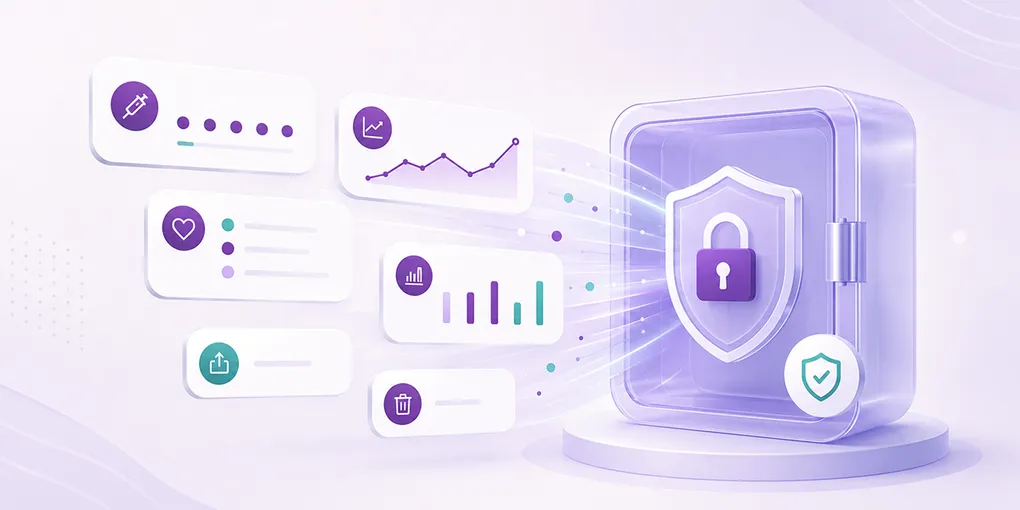
GLP-1 tracker apps have made managing medications like Zepbound and Mounjaro genuinely easier. You’re tracking injections, logging weights, noting side effects, and building a detailed picture of your therapy over months. That is sensitive data and it deserves serious protection. Health data helps people make better decisions about their care, but because it is deeply personal, protecting it is just as important as tracking it. Yet most people give little thought to who can access it and what happens if something goes wrong. Here are six rules that every GLP-1 user should follow to keep their health data safe.
Rule 1: Know Exactly What Data a GLP-1 App Collects
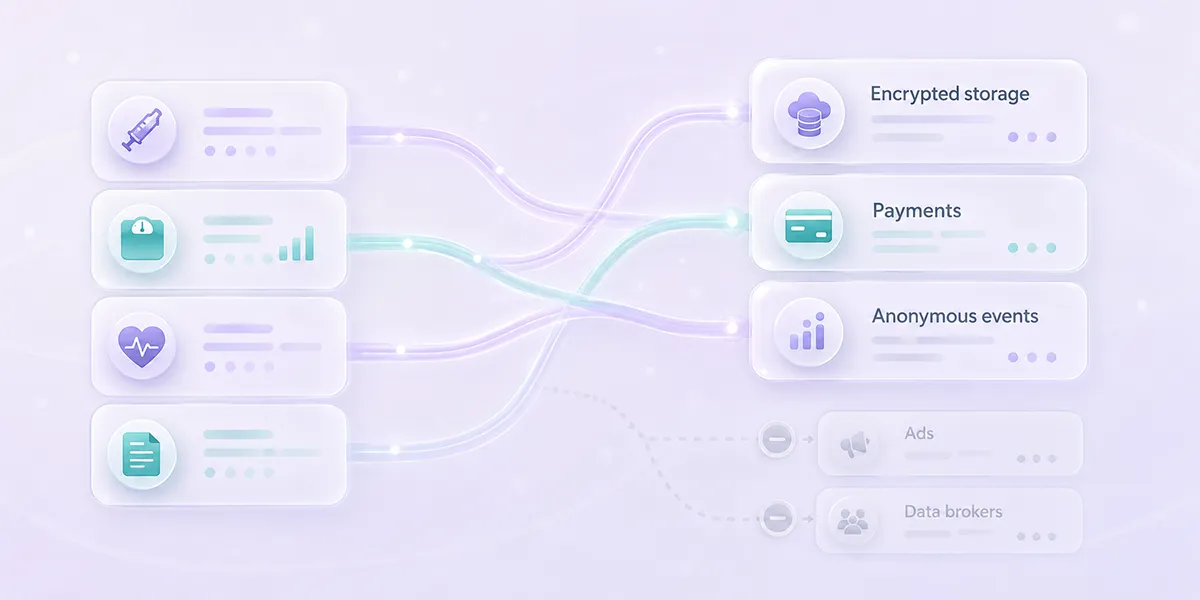
Most people tap the consent button without ever reading what they’re agreeing to. A GLP-1 tracking app might collect your medication name, dosage, side effects, mood, weight and then share that data with third-party analytics companies, advertisers, or data brokers without it ever feeling obvious to you. Go to the company’s website or open its privacy policy and read how it handles your data. If the description feels vague or lacks specific details, that could be a serious concern.
How Glapp handles it: Glapp’s business model is your subscription. There are no advertising trackers, no Facebook pixel, and no data brokers. Glapp limits analytics to product-improvement data and does not use it for advertising. We avoid sending sensitive free-text notes, photos, payment details, AI report contents, or full health histories to analytics providers. Those tools only receive anonymous event names like “user logged a shot.” Payments are handled by Stripe, Apple, or Google, so Glapp does not store your full card details.
Rule 2: Use Strong Account Security
Think about what lives inside a health tracking app: injection dates, medication doses, side effects, weight history, and private notes. If someone got into your account, they could see a detailed record of your medical life. Weak passwords and reused logins are still the most common security problems.
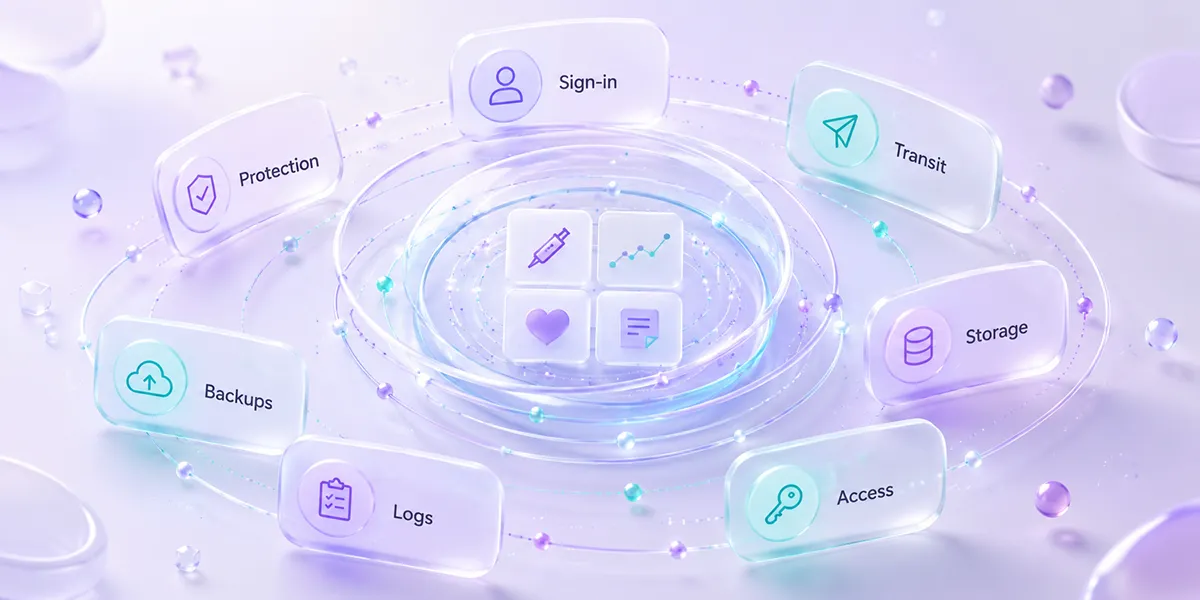
How Glapp handles it: Glapp has no passwords to leak or forget. You sign in with Google, Apple, or a one-time code sent to your email - so there’s nothing for hackers to steal in a breach. Email login codes expire within 10 minutes and lock down after too many attempts, so nobody can guess their way in. On your phone, your login lives in the same hardware-protected vault as your banking apps - Apple’s Secure Enclave on iPhone, hardware-backed Keystore on Android. On the web, it’s stored in a signed, encrypted cookie that malicious websites can’t read or steal.
Rule 3: Understand Who Owns the GLP-1 medication tracker
Apps can be built by a single person - a solo entrepreneur or indie developer working from their laptop. With the rapid rise of vibe coding (using AI tools to generate entire apps), the barrier to launching a simple weight loss medication app has dropped dramatically. That’s genuinely exciting but it comes with a real trade-off. A solo developer, however talented, is far less likely to have deep experience in the nuanced, high-stakes world of sensitive health data handling. Security best practices, encryption standards, and privacy compliance aren’t instinctive - they’re hard-won expertise that typically lives inside larger, more experienced teams. Search for recent news about the app or company. Look for clear ownership, a real privacy contact, and a named privacy policy - not just a vague terms-of-service page. How Glapp handles it: Glapp maintains a full GDPR-compliant privacy policy with a dedicated EU privacy contact, and proper legal mechanisms for international data transfers. It also covers California CCPA, the Washington My Health My Data Act, and Nevada’s consumer health data privacy law - including your right to access, correct, delete, export, and withdraw consent. Glapp also applies the same security standards healthcare systems use: encryption everywhere, access controls, audit logging, least-privilege access, and signed data-protection agreements with every vendor that touches your data.
Rule 4: Check How Your Data Is Stored and Backed Up
On-device storage might feel private - your data is right there on your phone, after all. But it carries a hidden risk. Lose your phone, accidentally delete the app, switch to a new device, or skip setting up backups correctly, and months of carefully tracked health history can vanish in an instant.
The modern standard is secure cloud storage: your data lives on encrypted servers, backed up automatically, with proper access controls keeping it locked down. Think of it like the difference between keeping cash under your mattress versus in a bank - one feels more “hands-on,” but the other is genuinely safer. Read the app’s FAQ and Terms of Service and look for two specific phrases: encrypted at rest (meaning your stored data is scrambled and unreadable to anyone without the right key) and encrypted in transit (meaning your data is protected as it travels between your phone and their servers). If you can’t find both, that’s a red flag.
How Glapp handles it: Your data is stored in a professionally managed database and encrypted both at rest and in transit, the same way sensitive financial systems are protected. Every connection between the app and Glapp’s servers is encrypted. Daily automatic backups run to a separate region, so a major outage won’t wipe your history. Cloudflare sits in front of the servers to help block attacks, abuse, and spam before they reach the system. Glapp also uses cryptographic checks to prevent unauthorized access patterns.
Rule 5: Remember That Health Data Is Part of Your Identity
We tend to think of identity theft as someone stealing a credit card number. But GLP-1 health data privacy is just as identifying and often more sensitive. Your medication list, your dosing schedule, your weight history: these details can affect how insurance companies, employers, and others perceive you.
The more widely your health data is shared, the more surfaces there are for it to be misused, re-identified, or exposed in a breach. Treat your health data with the same protectiveness as your financial data. Limit what you share, understand who receives it, and avoid apps that send your health details to third-party analytics services.
How Glapp handles it: Every request to Glapp’s servers has to prove who you are, so no one can browse user data without being logged in. Even then, the database only returns data that belongs to your account.
Rule 6: Know Your Rights - Delete, Export, and Withdraw
In most countries, you have real legal rights over your health data and they’re stronger than most people realize. You can typically request to delete your records entirely, and export your history to take somewhere else. The problem is that having a right and being able to use it are two very different things. Many apps bury deletion options, make data exports complicated, or simply don’t respond to requests. Technically compliant, practically frustrating.
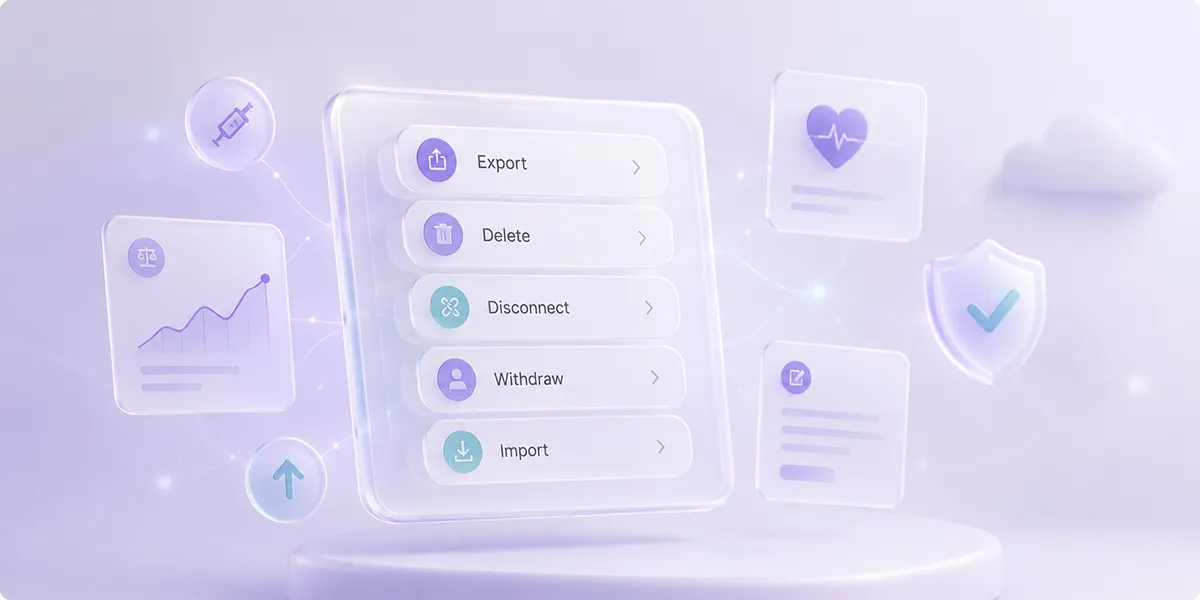
How Glapp handles it: Delete your account in one tap. Your name, email, photo, all your login sessions, and your email-marketing record are wiped instantly in a single action. You can also export your data at any time by emailing Glapp - full data-portability requests are honored. Apple Health and Google Health Connect integrations are opt-in and can be disconnected at any time. And if you’re coming from another app like Shotsy, you can upload an export and have your full history preserved in one click - your data doesn’t belong to your old app any more than it belongs to your new one.
Why Glapp Is the Smart Choice for Privacy
Glapp tracker was built on one foundational premise: your health data belongs to you whether you’re tracking Wegovy, Mounjaro, Zepbound, or any other GLP-1 injectable. And protecting it shouldn’t mean giving up the features that actually make your GLP-1 therapy easier to manage.
In practice, you get a seamless experience across iPhone, Android, and the web without trading your security for the convenience. You get weekly AI-powered progress reports and smart shot reminders without your health details being quietly funnelled into advertising systems. You get automatic, geographically separated backups without ever having to configure a single setting yourself.
When it comes to protecting your health data, the smartest thing you can do is choose an app whose interests are genuinely aligned with yours. With Glapp, they are.