


Shot History
Record dates, times, injection sites, and the dose information your research team shares with you.
Glapp is a free retatrutide tracker for iPhone, Android and web that keeps your “reta” shots, side effects and weight in one personal record, with an estimated medication curve and TRIUMPH-1 comparison for context.
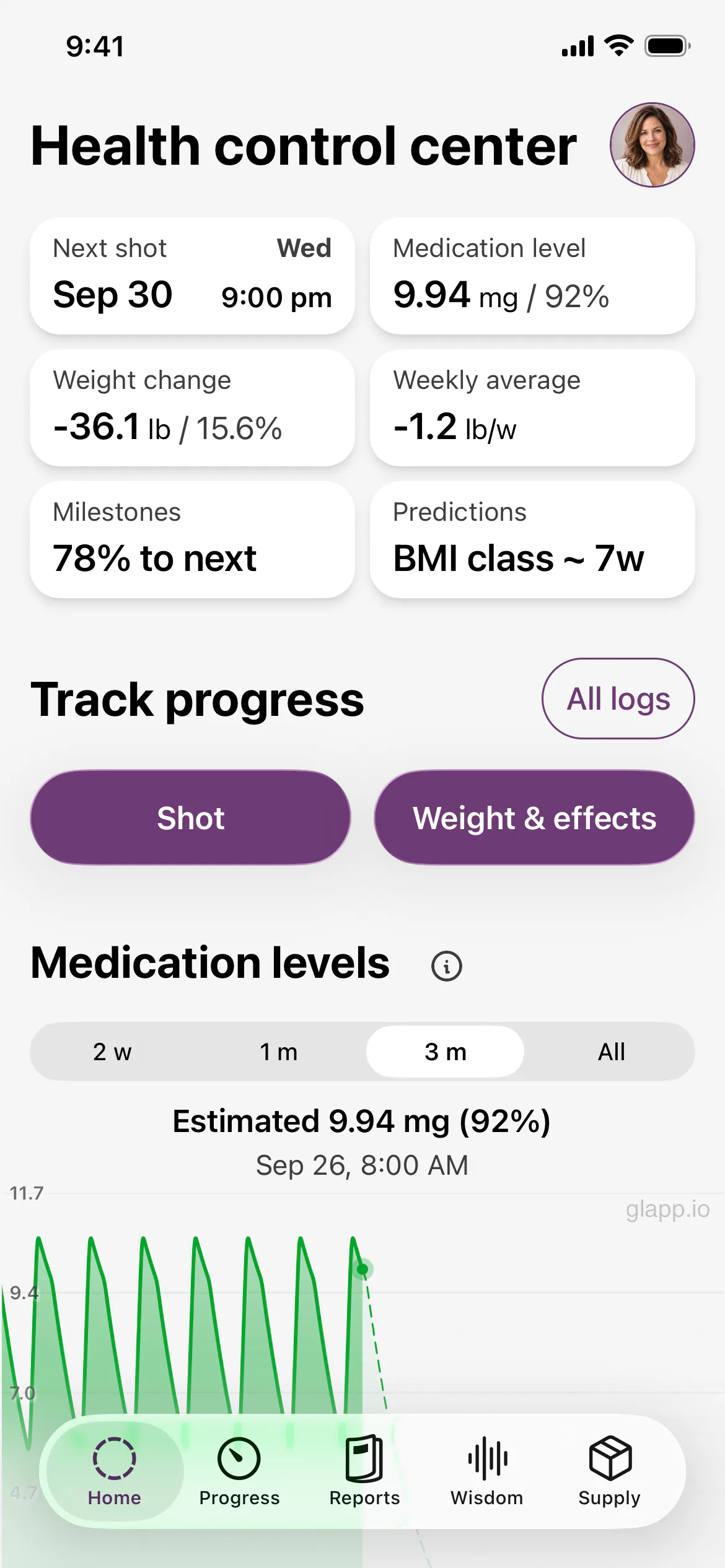
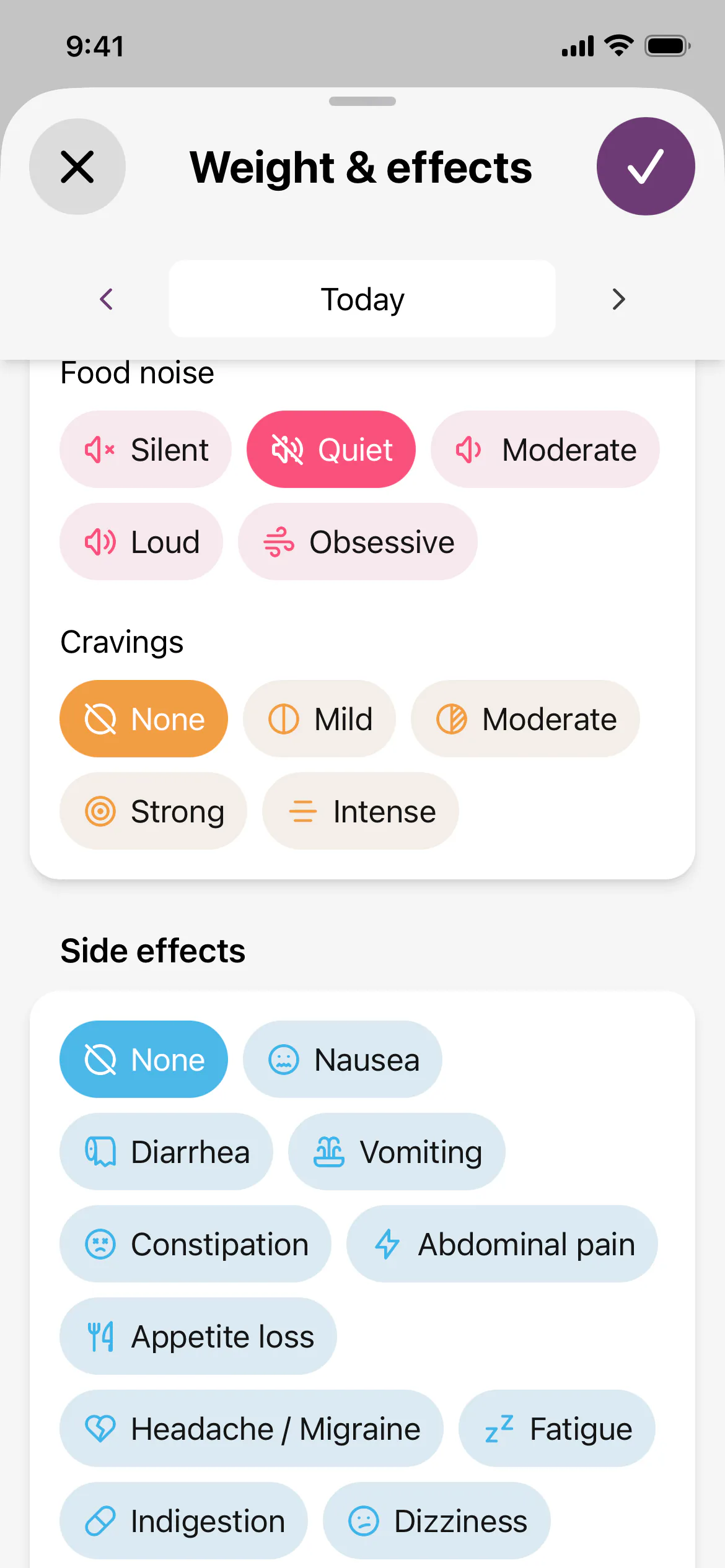
Choose what to log and build a record you can look back on.
Record dates, times, injection sites, and the dose information your research team shares with you.
Log side effects, hunger, food noise, mood, and energy alongside your shot history.
Follow your weight over time, optionally alongside TRIUMPH-1 group averages, and bring your own observations to your next study visit.
Converting mg to units? The free retatrutide dose calculator (RUO) turns a milligram amount and vial concentration into syringe units. It converts the numbers your research team gives you; it never suggests a dose.
In the Phase 2 trial published in the New England Journal of Medicine (2023), the most common side effects were gastrointestinal — nausea, diarrhea, vomiting and constipation. They were mostly mild to moderate, more frequent at higher doses, and clustered during dose escalation. Some participants reported skin sensitivity (dysesthesia) and a dose-related rise in heart rate that peaked around week 24.
Read the Phase 2 trial (NEJM, 2023)| Reported in trials | How to record it |
|---|---|
| Nausea, vomiting, diarrhea, constipation | Log the side effect, its intensity and the time since your last shot. |
| Appetite changes and food noise | Rate hunger and food noise in the daily check-in. |
| Skin sensitivity, heart-rate changes | Add a note to your check-in and report it to your study team. |
| Weight change | Weigh in on a consistent day; compare with TRIUMPH-1 averages if you like. |
New or worsening symptoms go to your study team through their reporting process. Glapp is a personal log, not adverse-event reporting, and a pattern in your log is a question to raise, not a diagnosis.
Glapp helps organize your personal record. Your research team interprets your symptoms and guides your care.
The science behind GlappRetatrutide is Lilly’s investigational once-weekly injection that activates the GIP, GLP-1 and glucagon receptors — a triple agonist, nicknamed “reta” or “GLP-3” online. Phase 3 TRIUMPH trials reported results through 2026, and Lilly has said it plans to submit to the FDA in the first quarter of 2027. Until a regulator approves it, retatrutide is not an approved medicine.
Glapp’s retatrutide curve uses an approximately six-day half-life from early clinical research, not a blood measurement. Trial comparisons show TRIUMPH-1 group averages over 80 weeks (and its 104-week extension), not a forecast of your individual results.
Sources and limitsYour personal log does not replace official study visits or safety reporting. Report symptoms through your study team’s process and follow their instructions.
Create your account and add the information your study team permits you to record. Don’t guess a blinded treatment or dose.
Add a shot, a weigh-in, or how you feel. Build a record at a pace that works for you.
Review your history before a study visit. Note changes and questions to discuss with your research team.
RUO means Research Use Only. Retatrutide is investigational and is not FDA approved. A research-use label does not make a product approved for human use.
Yes. Glapp includes retatrutide as a medication option for recording shots, side effects and weight, with an estimated medication curve based on an approximately six-day half-life and a comparison view against TRIUMPH-1 group averages. In a clinical trial, record only information your study team allows you to know and keep. Glapp does not replace official trial records or safety reporting.
No. As of September 2026 retatrutide is investigational. Lilly has reported results from several Phase 3 TRIUMPH trials and has said it plans to submit an application to the FDA in the first quarter of 2027. Whether and when it is approved is a regulator’s decision.
Those are nicknames. Retatrutide is a single molecule that activates the GIP, GLP-1 and glucagon receptors, which is why it is called a triple agonist. “GLP-3” is not a drug class; it is online shorthand for the same investigational compound.
In the Phase 2 trial published in the New England Journal of Medicine in 2023, the most common side effects were gastrointestinal — nausea, diarrhea, vomiting and constipation — mostly mild to moderate, more frequent at higher doses and during dose escalation. Some participants reported skin sensitivity (dysesthesia) and a dose-related increase in heart rate that peaked around week 24. Glapp lets you log how you feel; report symptoms to your study team.
Safety is what the Phase 3 program is designed to evaluate, and a personal tracker cannot answer that question. Glapp can help you keep a clear record of how you feel; interpretation and any decision about treatment belong with your study team.
Glapp offers a free retatrutide dose calculator (RUO) that converts a milligram amount and a vial concentration into insulin-syringe units. It is a conversion tool only; it does not suggest a dose. Use the values your research team gives you.
No. Glapp records the information you enter. It does not choose doses, recommend titration, or tell you when to change your schedule. Follow your research team’s instructions.
No. They are simplified estimates based on your entries and population assumptions. They cannot establish your actual blood level, individual response, or whether a product contains what its label says.
Core tracking is free, including shots, weight, side effects, and estimated medication levels. Glapp Max adds full Progress Reports, Milestones & Predictions, premium support, and an ad-free experience.
No. Glapp is an independent tracking app. It does not sell medication, verify research products, or manage enrollment in clinical trials.
Bring your shots, symptoms, and weight together. Start with the details that matter to you.