New in Glapp: Is It Your Cycle or Your GLP-1?
See whether a weight bump, food noise or bloating is your period or your Wegovy, Ozempic, Mounjaro or Zepbound shot.
Before anything else: cycle tracking is completely optional. It stays off unless you switch it on. If it’s not for you, leave it off and Glapp works exactly the way it always has.
This has been the most requested feature in our user polls, and honestly, it’s easy to see why. So many of you asked for it, and once you see your cycle and your shots side by side, it just makes sense.
Some of you see the scale jump around your period and start wondering if your dose isn’t enough anymore. Others notice the cravings and food noise come back the week before, even though you haven’t missed a shot. Either way, you’ve told us it’s confusing, and it’s hard to know whether to blame your hormones or your medication.
So we built it in. Glapp now puts your cycle right next to your GLP-1 shots, so you can see which one is behind how you feel. It’s now in beta.
Why your cycle and your GLP-1 can feel exactly the same
Your hormones and your medication both move your weight, your appetite and your gut - and they do it on surprisingly similar timescales.
Around your period, a lot of women hold extra water. In a 2023 study of 42 women, body weight was about 0.45 kg (1 lb) higher during menstruation than in the first week of the cycle, and almost all of that was extra fluid, not fat. A year-long diary study covering 765 cycles found that bloating and fluid retention peaked on the first day of flow. On a weekly weigh-in, that’s more than enough to make it look like your loss has stalled.
The week before your period works on appetite instead. A 2025 meta-analysis pooling 15 datasets found people ate more in the luteal phase (after ovulation) than in the follicular phase - around 168 kcal a day more on average, though not every study in it found a difference. In other words, estrogen may help keep appetite down, while progesterone may nudge it back up.
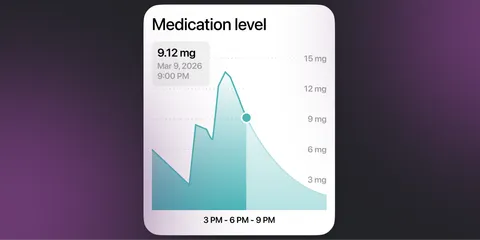
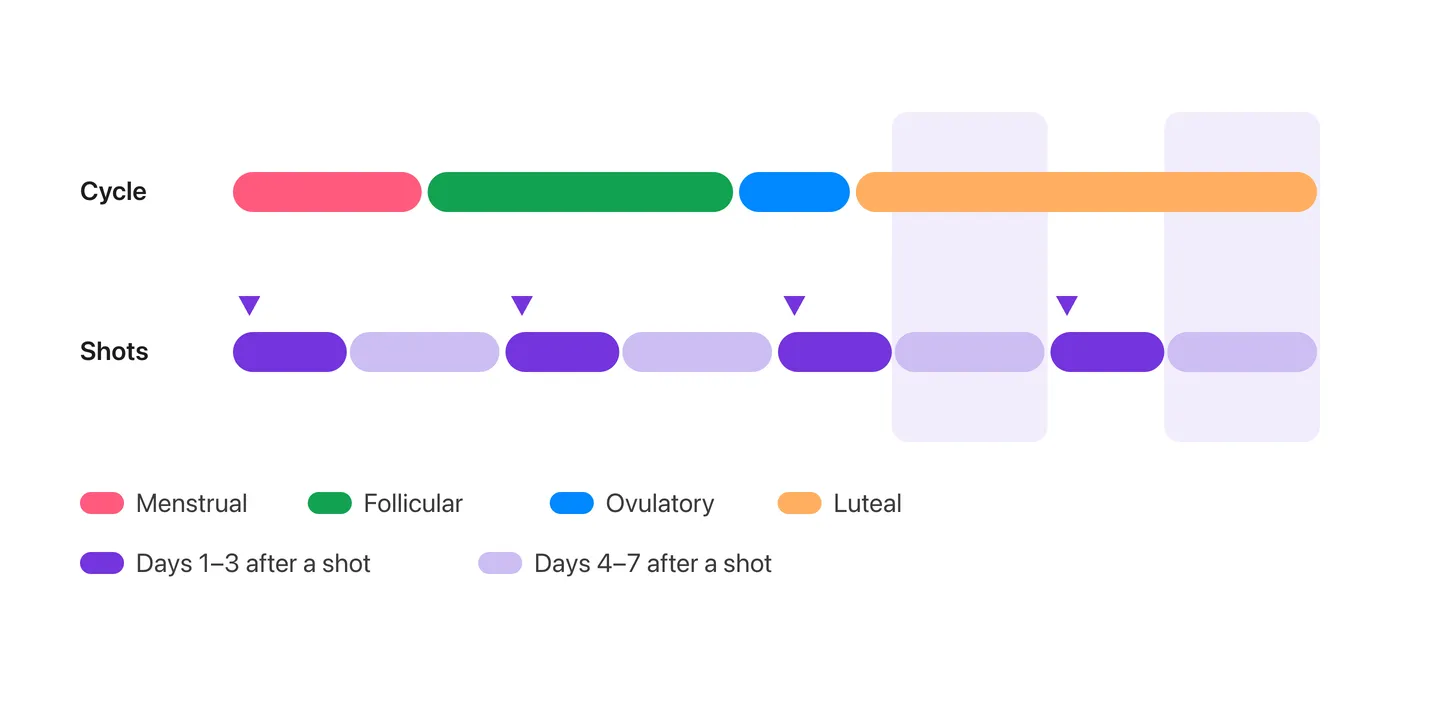
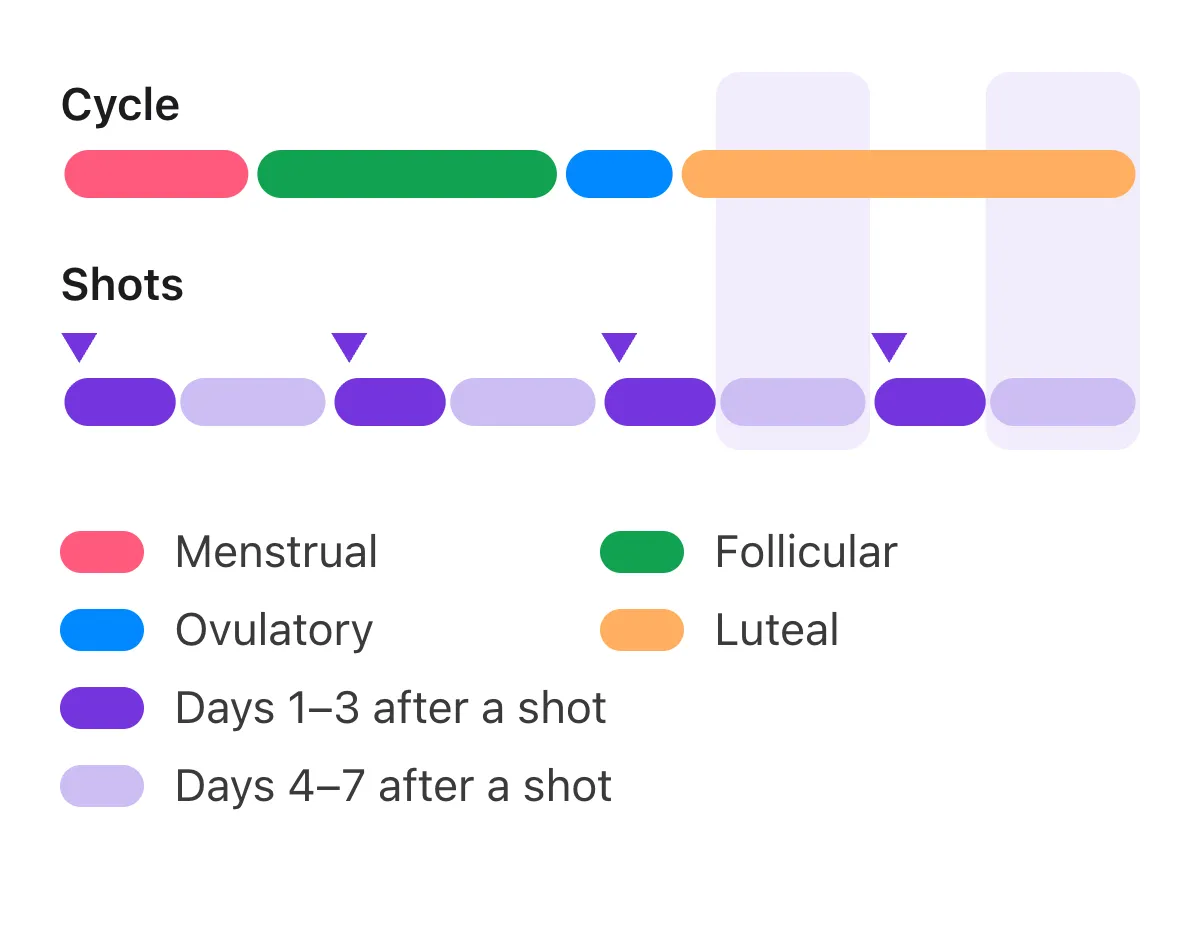
Now put that next to a weekly shot. As we covered in our Medication Levels post, nausea tends to cluster in the first few days after an injection, and food noise often creeps back in days 4 to 7 as levels drop. When a pre-period week lines up with the tail end of a shot week, it’s genuinely hard to tell from the inside which one is doing what.
Easy to set up, simple to track
Once you’ve switched it on, setup takes about a minute. Add your last few period dates by hand, or sync them automatically from Apple Health or Google Health Connect if you already track there.
After that, it lives in the same daily check-in you already use. Tap Weight & effects and you’ll see a new Period section: tap to mark your period day, and add your flow (light, medium or heavy) if you want to - it’s optional. Forgot to log for a few days? Open Period dates and fix past periods right on the calendar.
The idea is dead simple: one extra tap on the days it’s relevant, and Glapp does the lining-up for you.
Know where you are in your cycle, right next to your shots
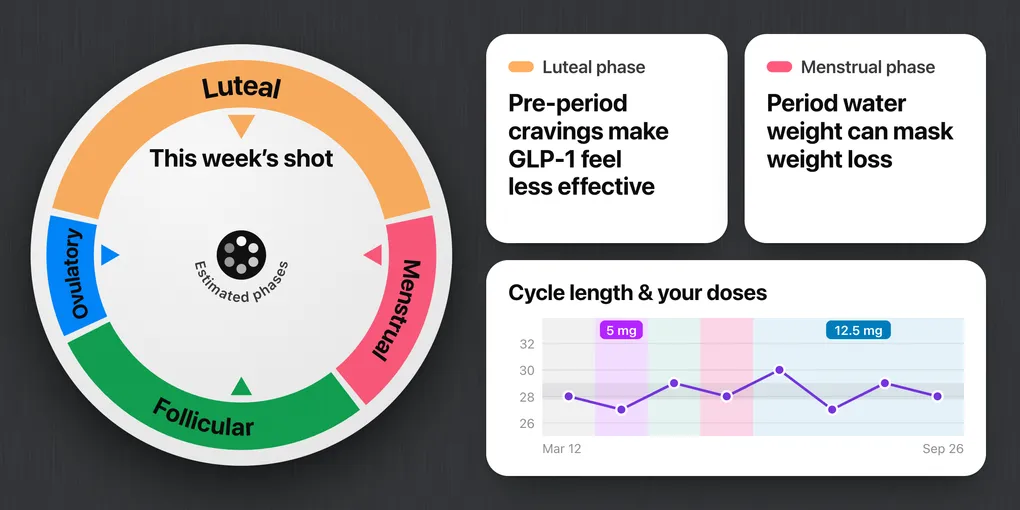
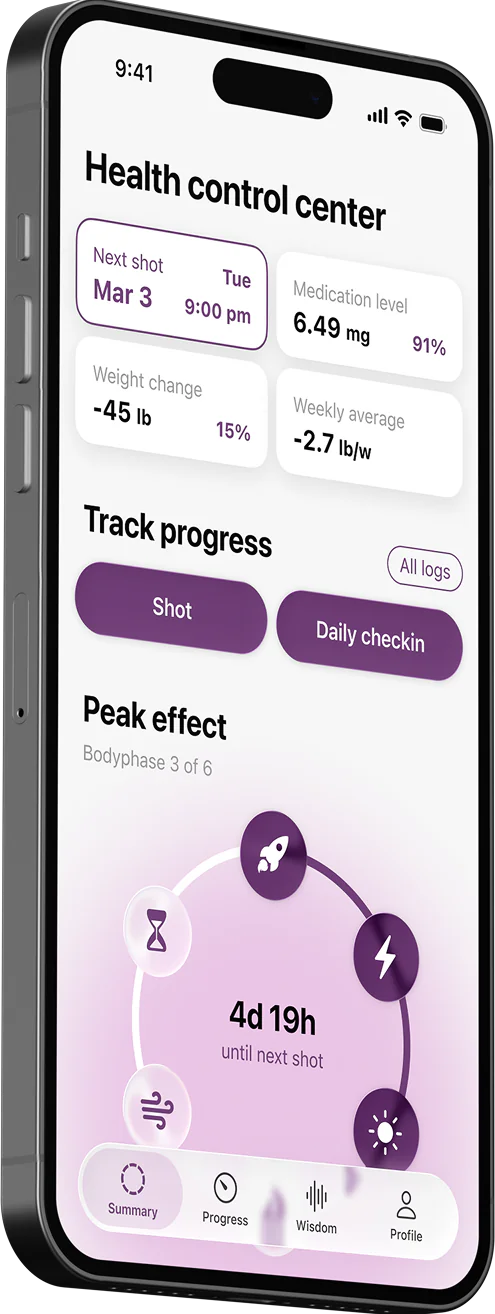
If your periods come fairly regularly, the Home tab now shows a Cycle overview: your cycle day, which phase you’re in (menstrual, follicular, ovulatory or luteal) and how many days until your next period - with your recent shots marked on the same ring.
Each phase comes with a short, research-backed note on what you might feel this week, and whether that’s more likely your cycle or your GLP-1. Tap More insights for the detail: a “Cycle or GLP-1?” breakdown, something practical to try, and the studies behind it.
Say you’re on cycle day 24, in your luteal phase. Glapp will tell you that pre-period cravings can make your GLP-1 feel less effective, even though nothing has changed with your dose. If hunger shows up before your period every month, your cycle is probably part of it; if it rises near the end of every shot week, your shot timing is too. The practical bit: plan your snacks before the cravings hit, and hold off on judging your dose until your period starts. Think of it as shot phases, but for your cycle.
See what changes across your cycle
Weight loss on GLP-1 is never a straight line, and your cycle is a big part of why. Tap Charts on the Cycle overview and you’ll find four new charts. Each one answers a question you’ve probably asked yourself, using nothing but your own logs.
“Why did I stall this week?”
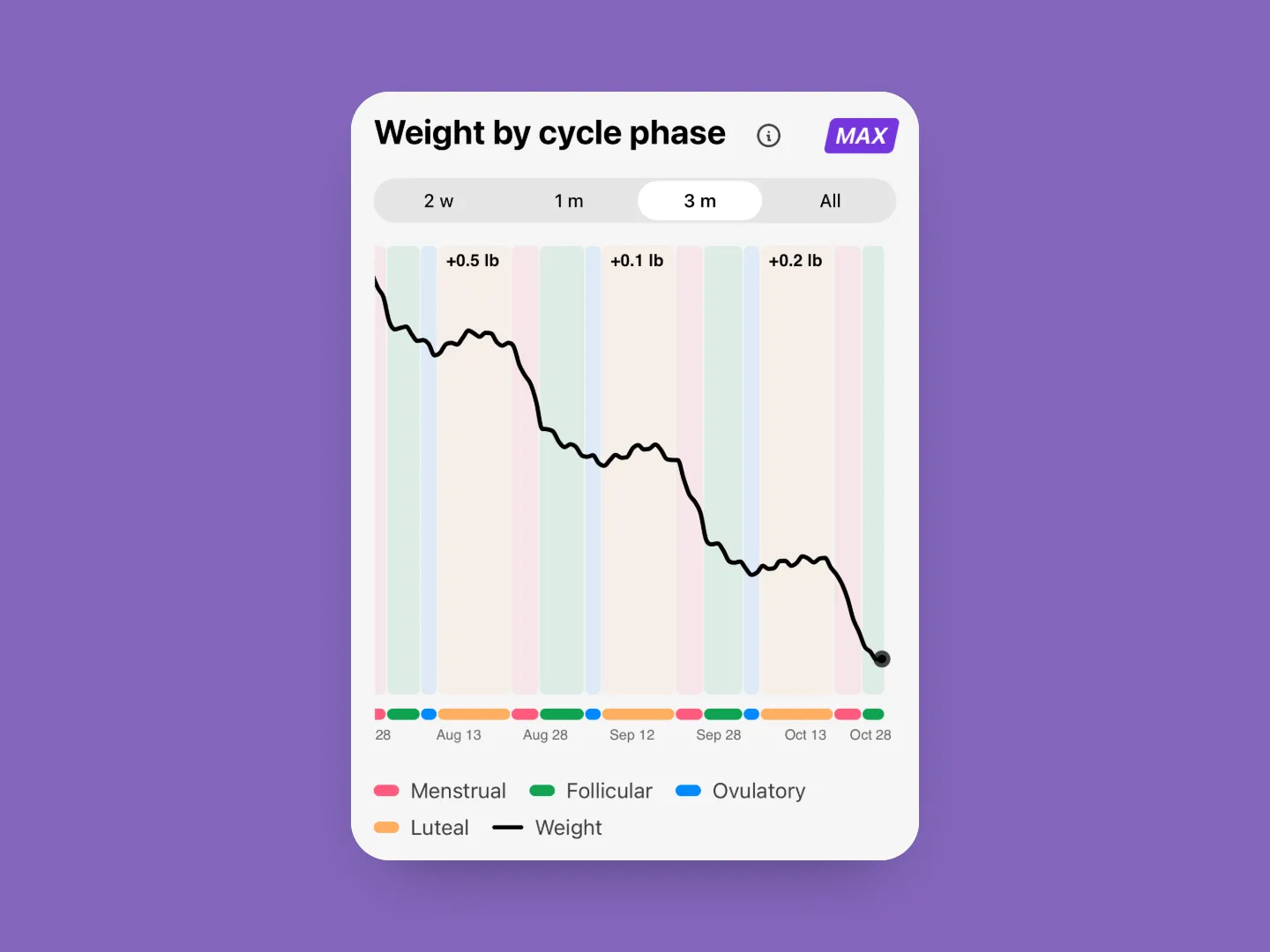
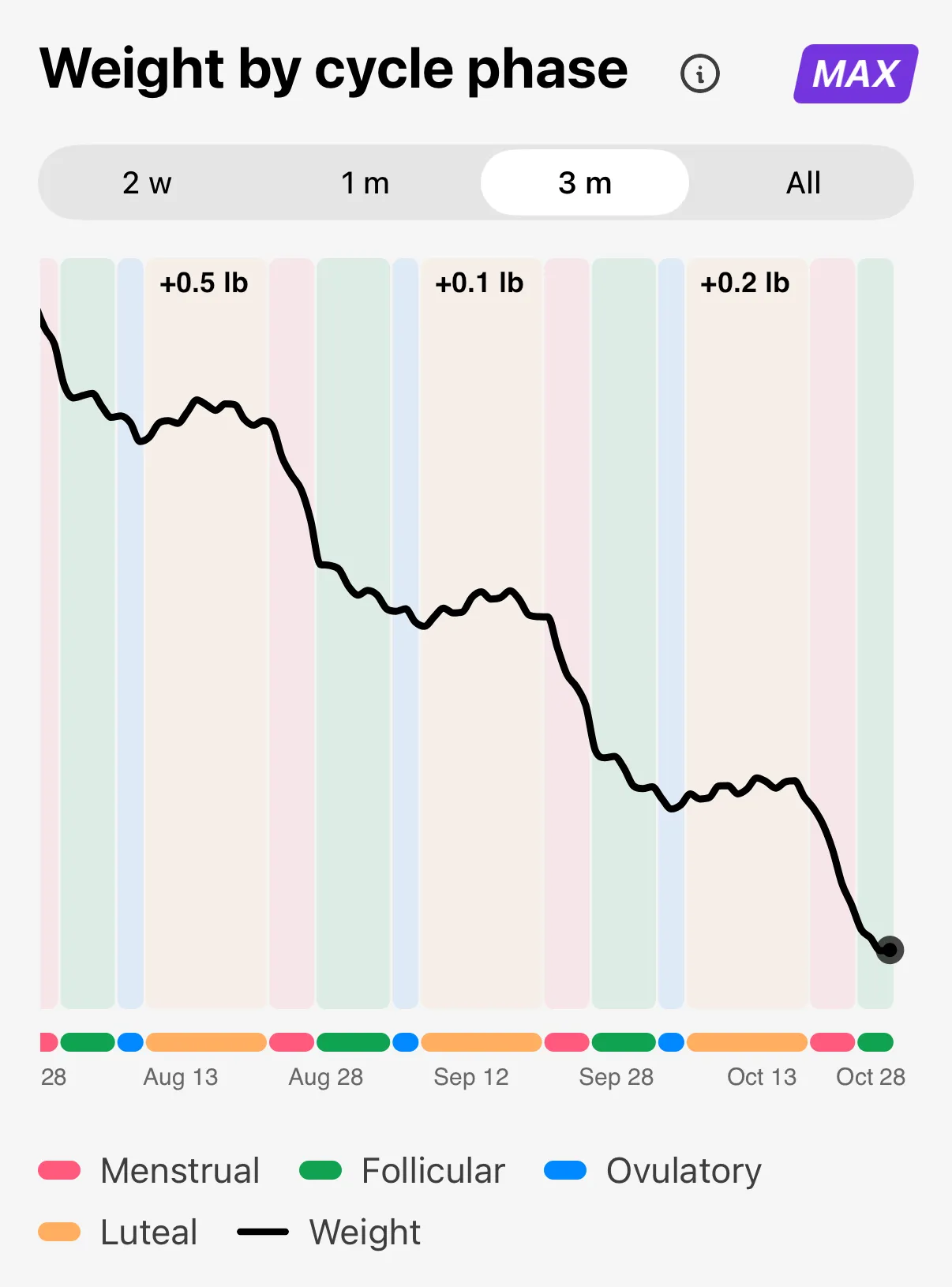
Weight by cycle phase shows your weight with each phase shaded behind it, plus your average pace in each phase in lb per week. Your weight doesn’t drop at the same speed all month, and a flat week before your period is often just your cycle, not your dose stopping working.
Look at the same phase across a few cycles. If the same week stalls every month, that’s your normal rhythm, and the loss usually catches up once your period starts.
“Why is the food noise back?”
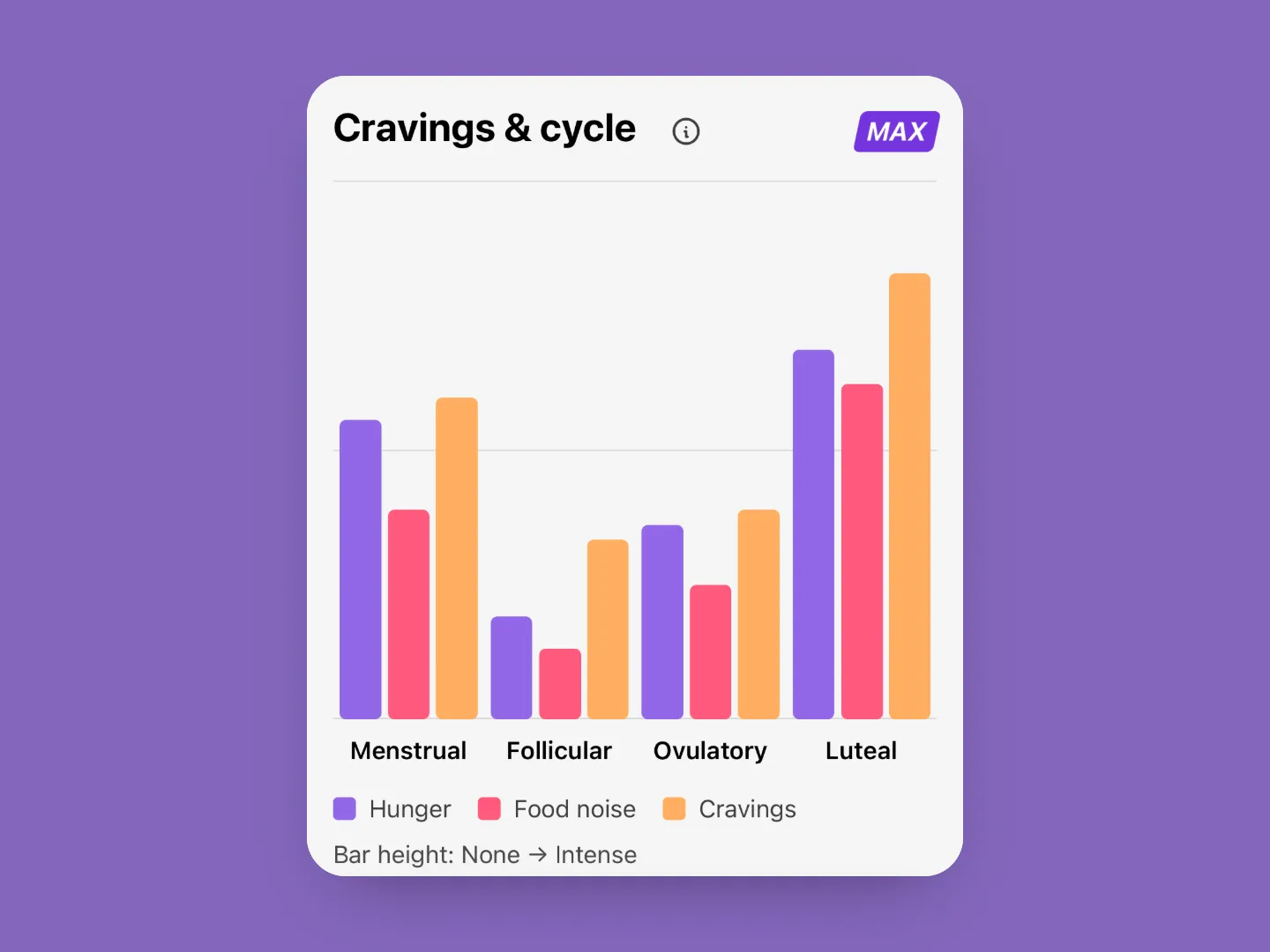
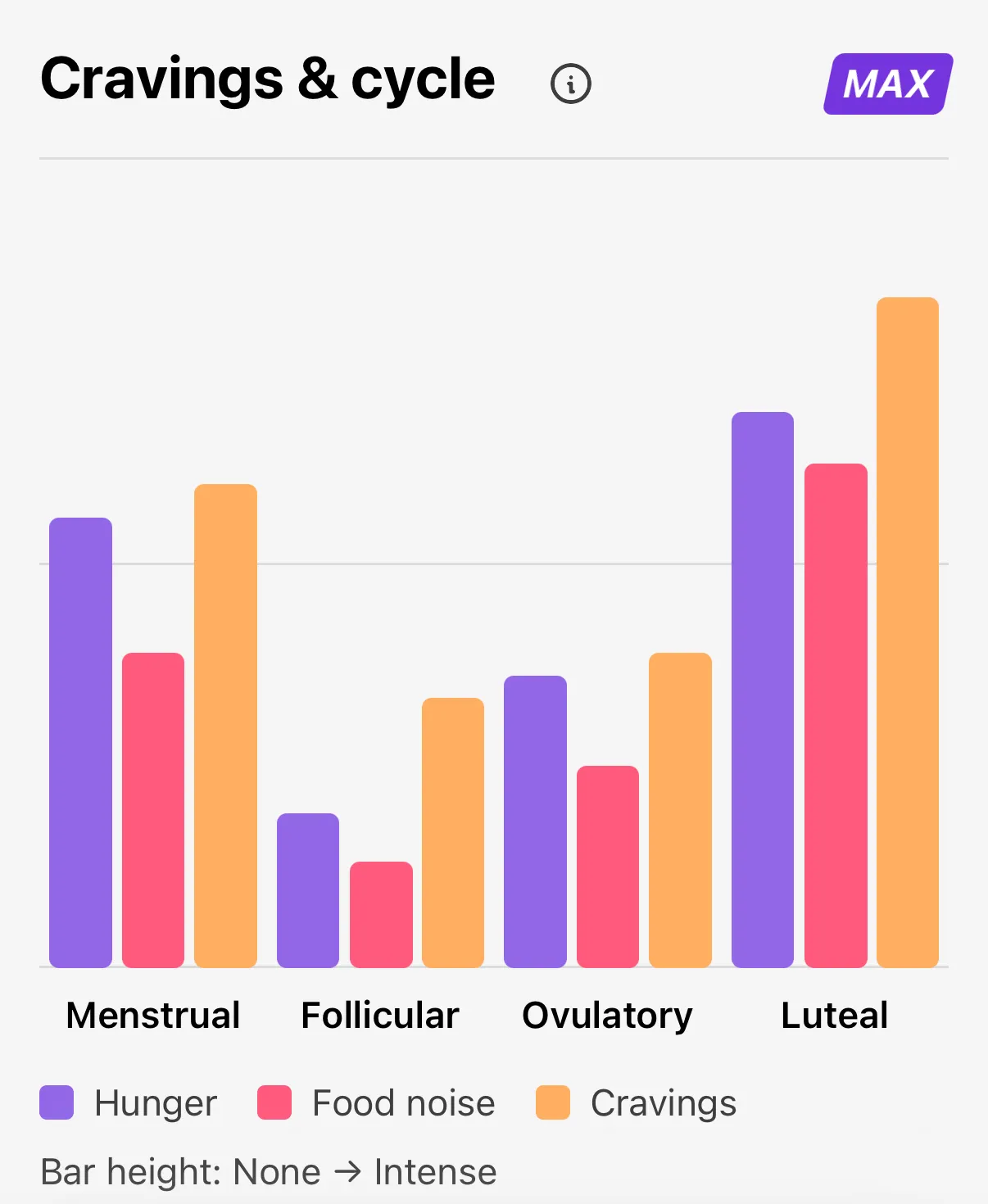
Cravings & cycle compares how strong your hunger, food noise and cravings were in each phase. Hunger and food noise can rise in certain weeks, even on the same dose.
Find the phase with the tallest bars. That’s your tough week, so it’s the one to plan meals and snacks ahead for.
“Is this bloating from my shot or my period?”
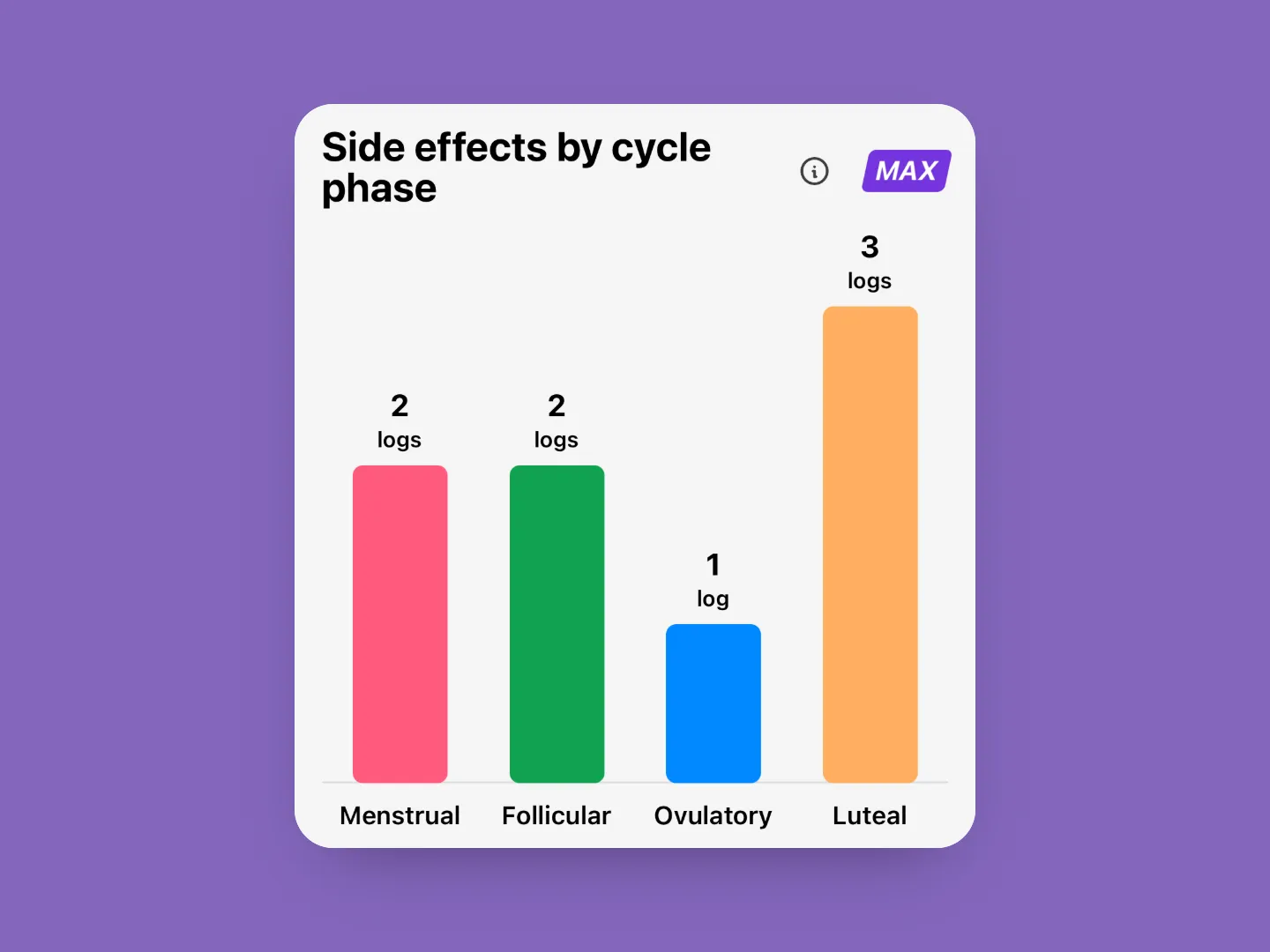
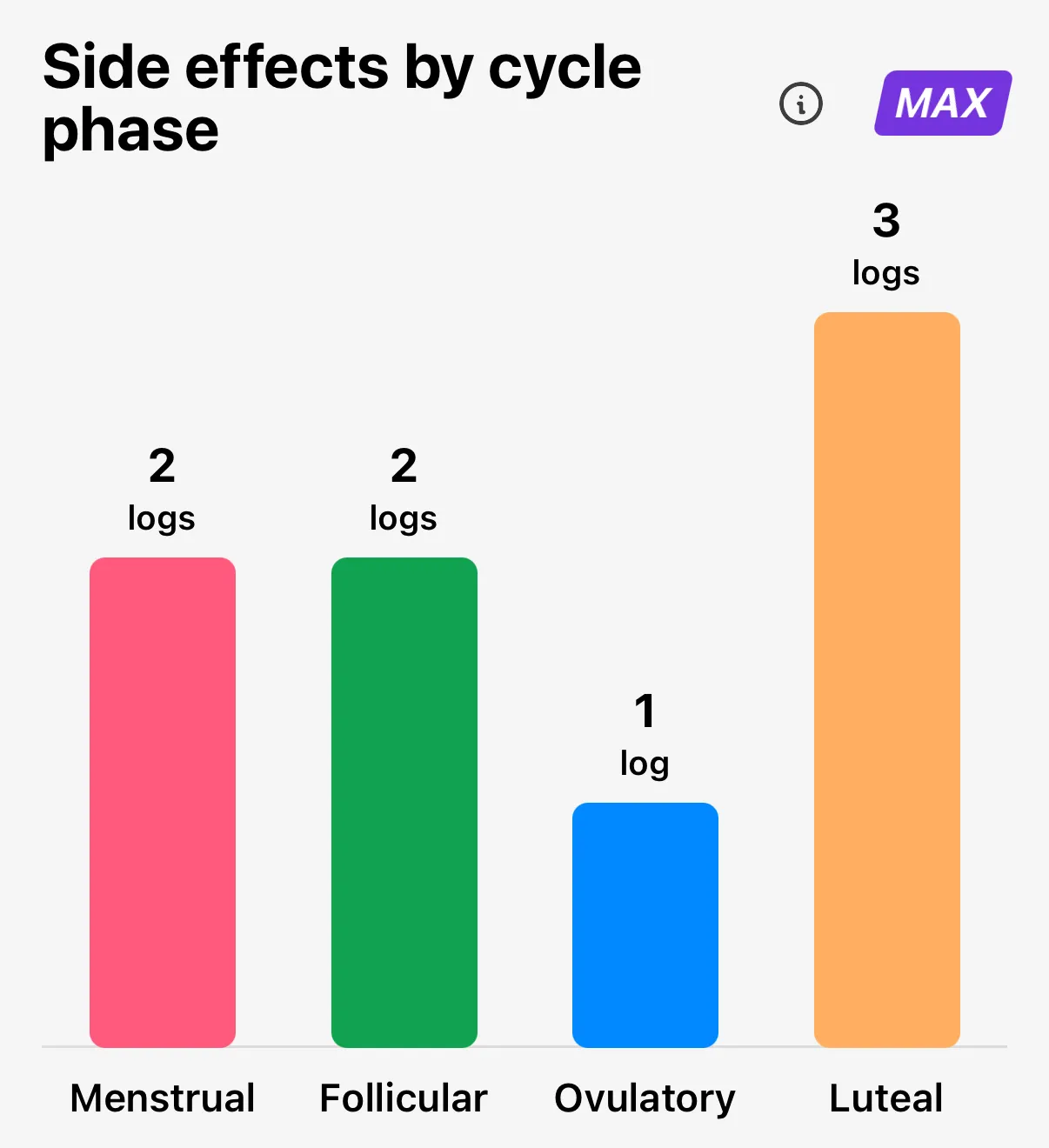
Side effects by cycle phase counts your logged side effects in each phase. Some symptoms come from your cycle, not your GLP-1, and knowing which is which shows you how well you’re really handling your dose.
Side effects that bunch up in the same phase every month are probably your cycle. Ones that show up a day or two after each shot, whatever the week, are more likely the medication. Either way, it’s a useful pattern to bring to your doctor.
“Did my cycle change when my dose did?”
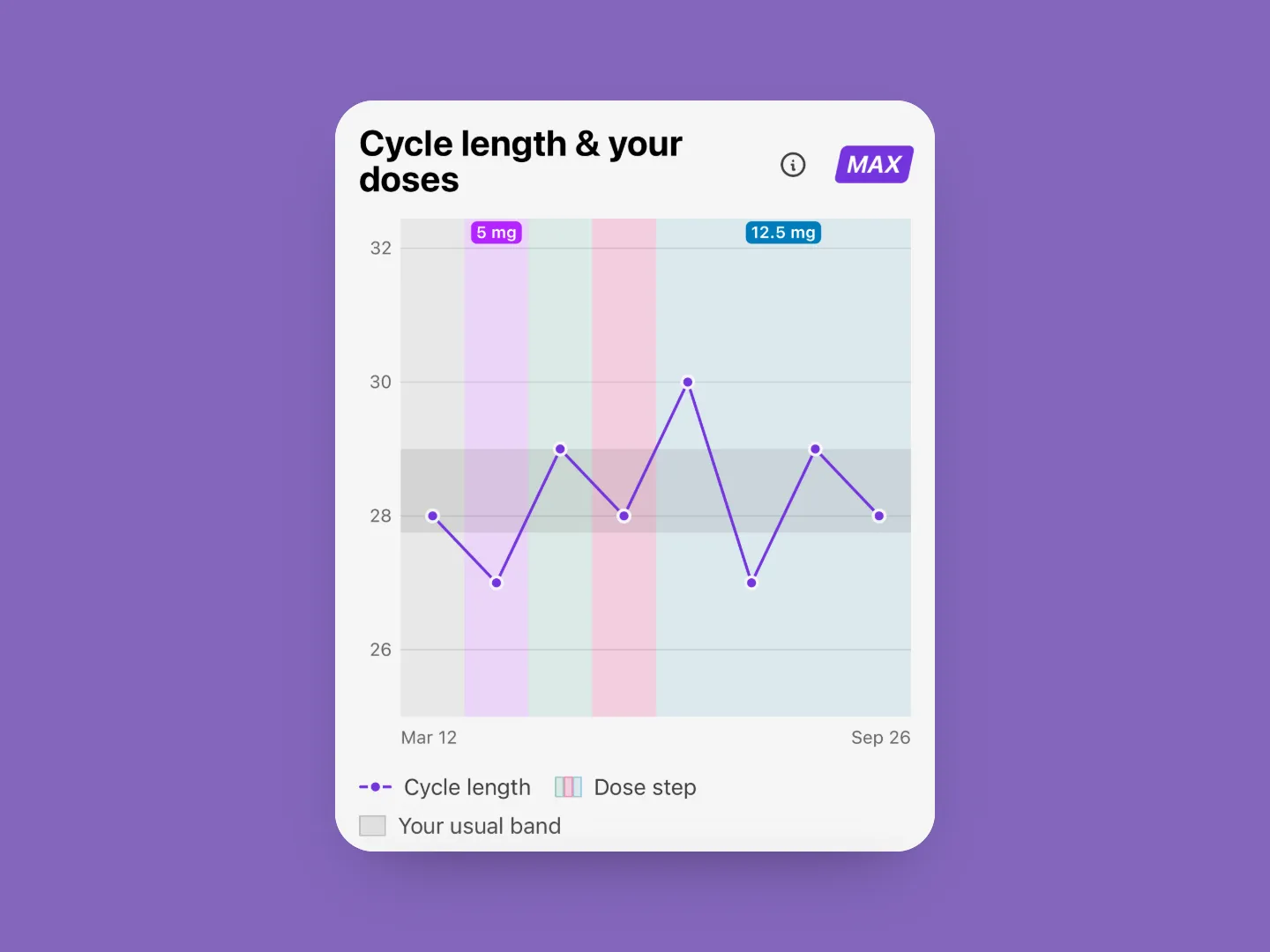
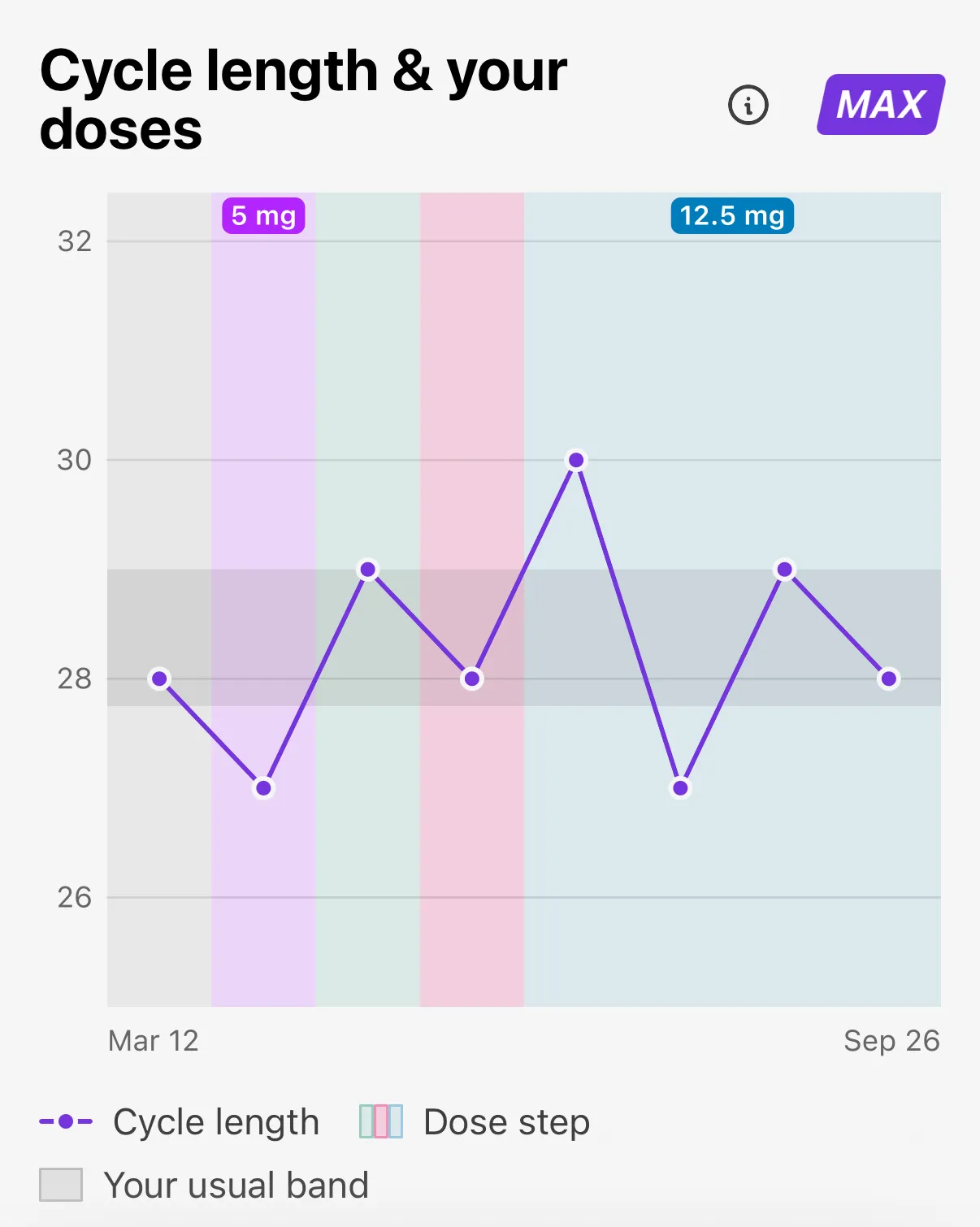
Cycle length & your doses plots the length of each cycle against your dose steps, with your usual range shaded as a band. You’ll see whether your cycle shifted when your dose went up, or stayed right where it always is.
Dots inside the band are your normal cycle length. Dots outside it right after a dose increase are worth mentioning to your doctor.
All four charts are part of Glapp Max.
Irregular cycles? You get your own view
For some of us, GLP-1 changed when our periods come. In a survey of 1,754 women on GLP-1, 27% noticed changes to their cycle after starting treatment - rising to 43% among those with PCOS - most often periods becoming more predictable. For others, periods have never been predictable at all. Either way, guessing which phase you’re in just doesn’t work.
So if your cycles are irregular, Glapp skips the phase guesses and shows you two things that still make sense.
“Have my periods changed since I started?”
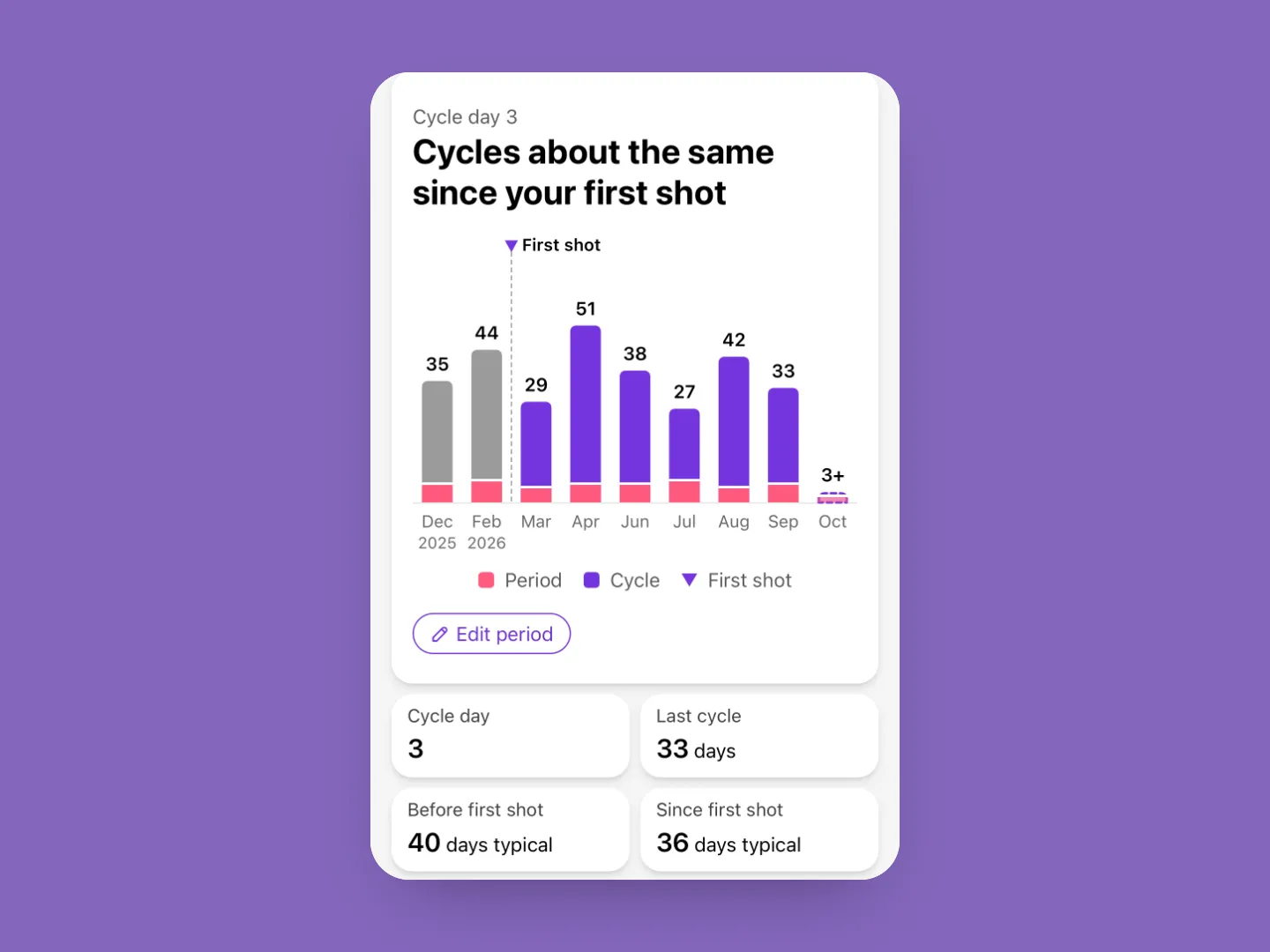
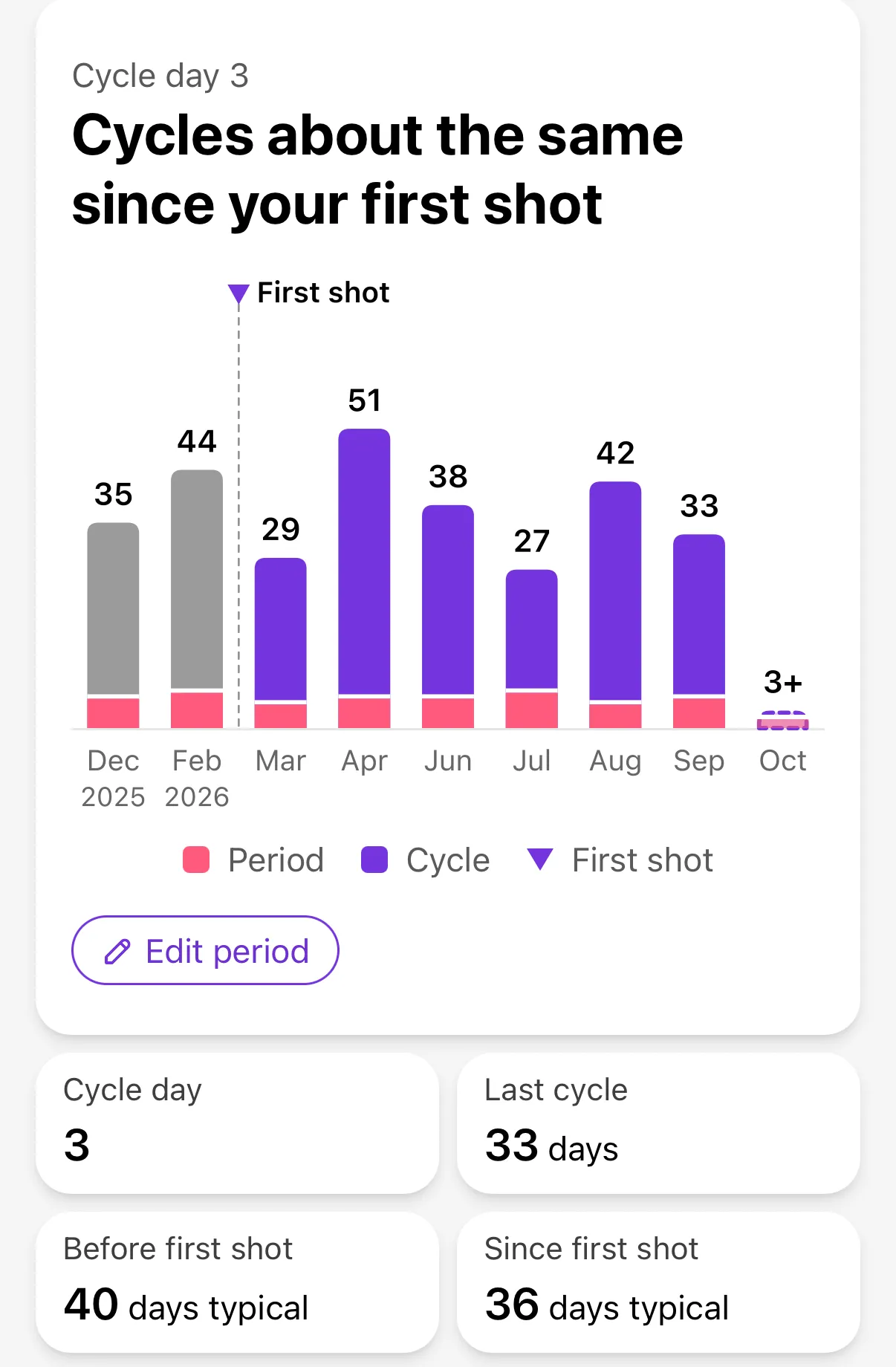
Cycles since your first shot shows the length of every cycle, before and after your first injection, with your typical cycle length on each side. For example: 40 days typical before your first shot, 36 days since. Even with irregular periods, you get a clear answer on whether your cycles have got longer, shorter or steadier.
Compare the two numbers. A big shift is worth bringing up with your doctor.
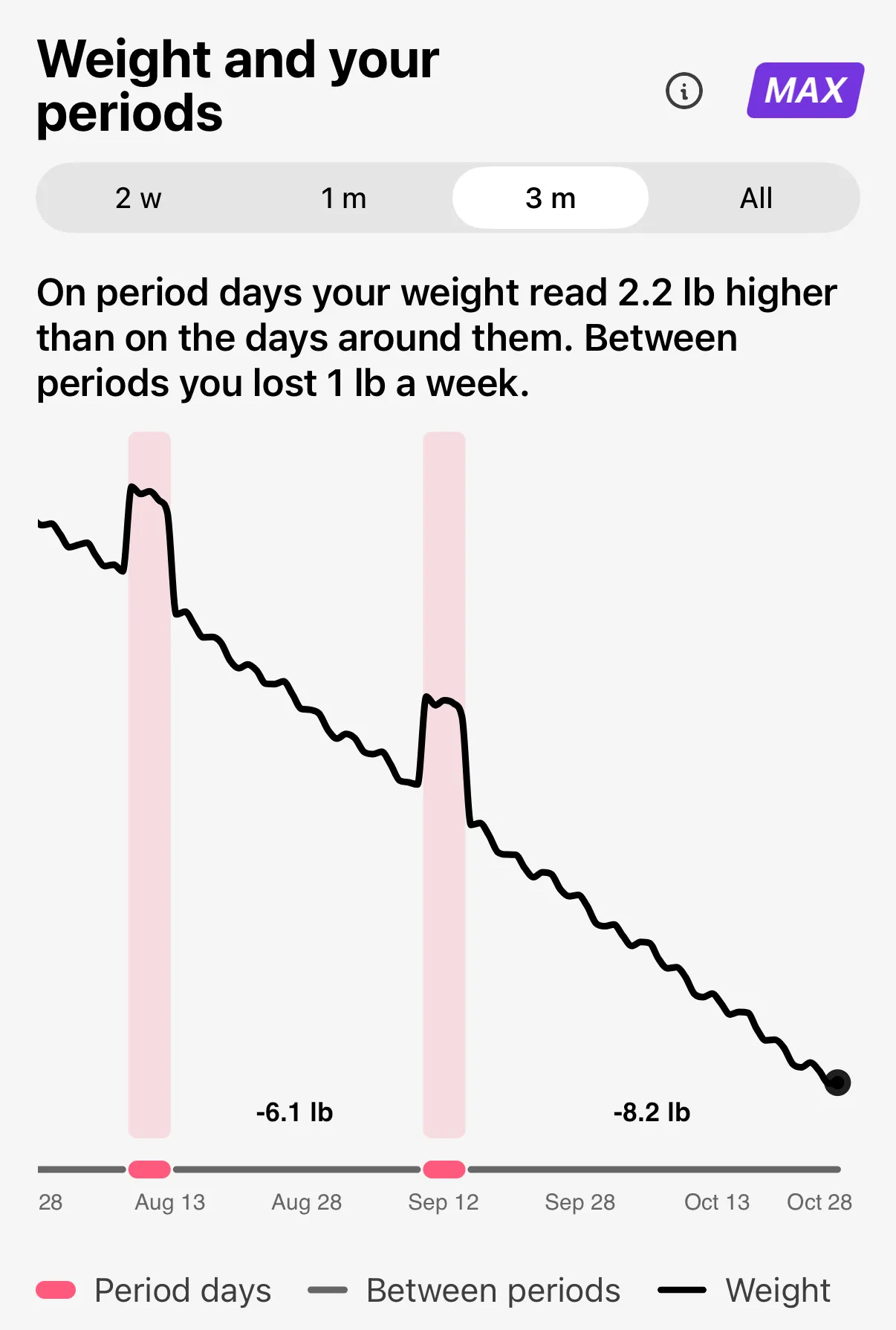
“Did I really gain, or is it my period?”
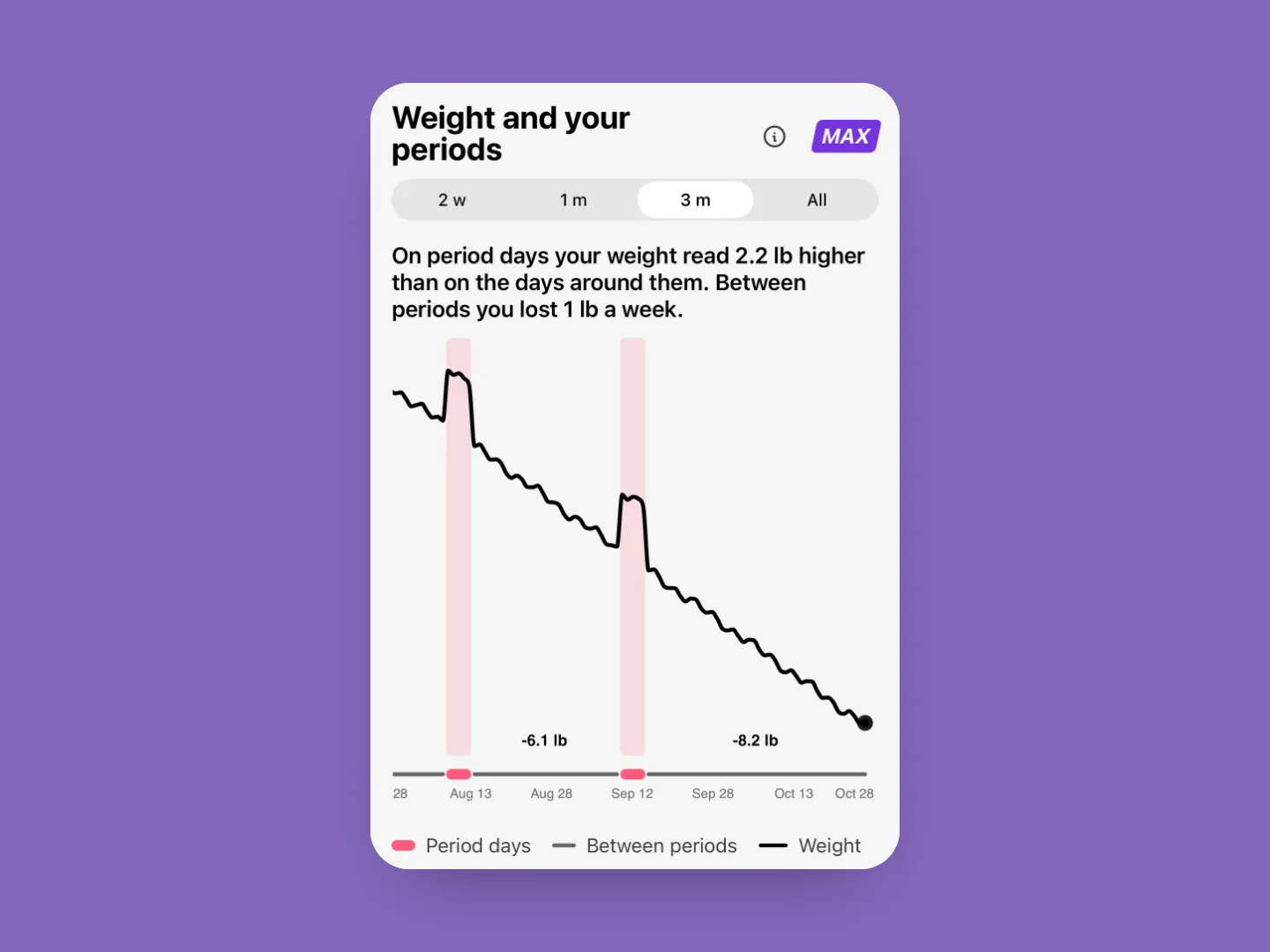
Weight and your periods shades your period days on your weight chart and separates the bump from the trend. It spells it out in plain words, like: on period days your weight read 2.2 lb higher than on the days around them, and between periods you lost 1 lb a week.
Don’t panic about the bump on period days - it’s usually water, and it goes away. Look at the change from one period to the next instead. That’s how fast you’re actually losing.
A quick note on the contraceptive pill
Cycle tracking in Glapp is there to help you understand your body - it isn’t a fertility tracker or a form of contraception.
And if you take an oral contraceptive alongside tirzepatide (Mounjaro, Zepbound), this one’s worth knowing. Tirzepatide slows how fast your stomach empties, which can reduce how well the pill is absorbed. Its prescribing information advises switching to a non-oral method or adding a barrier method for 4 weeks after you start, and for 4 weeks after every dose increase. UK guidance from the FSRH Clinical Effectiveness Unit says the same, and doesn’t call for the extra precaution with semaglutide. If any of this applies to you, have a chat with your doctor or pharmacist about what’s right for you.
Your data stays private
We know period data can feel more personal than a weigh-in or a shot log - especially right now - and some of you told us exactly that as soon as we mentioned this feature. That’s completely fair. So you decide whether it goes in, and how much. If you do switch it on, you choose where your dates come from: sync them from Apple Health or Google Health Connect, or just enter them by hand. Logging flow is optional too. Health syncs are opt-in and can be disconnected at any time, and you can delete your account in one tap.
Your cycle data gets the same protection as everything else in Glapp: encrypted in storage and in transit, only ever returned to your own account, and never passed to advertisers or data brokers. Our privacy policy also covers US state health-data laws like Washington’s My Health My Data Act, including your right to delete, export and withdraw consent. The full picture is in our post on privacy rules every GLP-1 user should know.
Find your pattern
There are so many different, unique scenarios here, one for each of us. Some of you have clockwork 28-day cycles, some of you have PCOS, some of you have watched your periods change completely since your first shot. We’ve tried to build something that makes sense for all of it, but this is a beta, and we’ll be listening closely and improving fast. If something doesn’t look right for your cycle, tell us at hi@glapp.io.
Available now in Glapp on iPhone, Android and web. Switch it on from the Home tab to set up your Cycle overview, then log your period in Weight & effects. Logging your period and the Cycle overview are free for everyone, like all essential tracking in Glapp; the cycle charts are part of Glapp Max.
If you’ve ever stared at the scale the week before your period wondering if your dose has stopped working, give it a go. A cycle or two of logs is all it takes to start seeing your own rhythm.
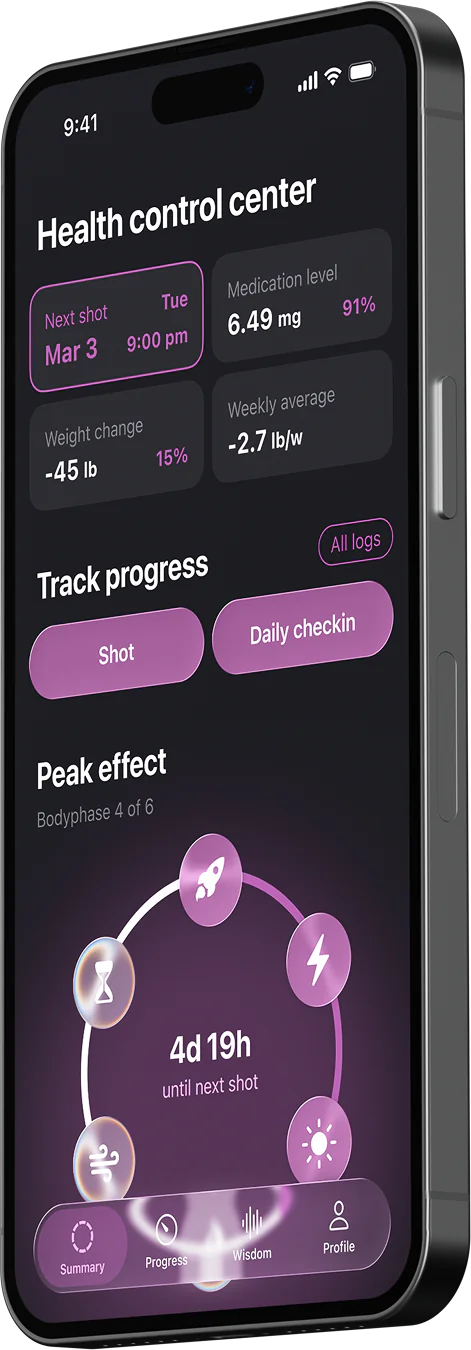
See your cycle next to your shots


References
- Tucker JAL, McCarthy SF, Bornath DPD, Khoja JS, Hazell TJ. The Effect of the Menstrual Cycle on Energy Intake: A Systematic Review and Meta-analysis. Nutrition Reviews, 2025.
- Body weight and body composition changes during the menstrual cycle. American Journal of Human Biology, 2023.
- White CP, Hitchcock CL, Vigna YM, Prior JC. Fluid Retention over the Menstrual Cycle: 1-Year Data from the Prospective Ovulation Cohort. Obstetrics and Gynecology International, 2011.
- Natural Cycles. Do GLP-1 weight loss drugs affect the menstrual cycle? Survey of 1,754 users.
- Therapeutic Goods Administration. Updated contraception advice for Mounjaro (tirzepatide). 2025.
- FSRH Clinical Effectiveness Unit. GLP-1 agonists and contraception. January 2025.